



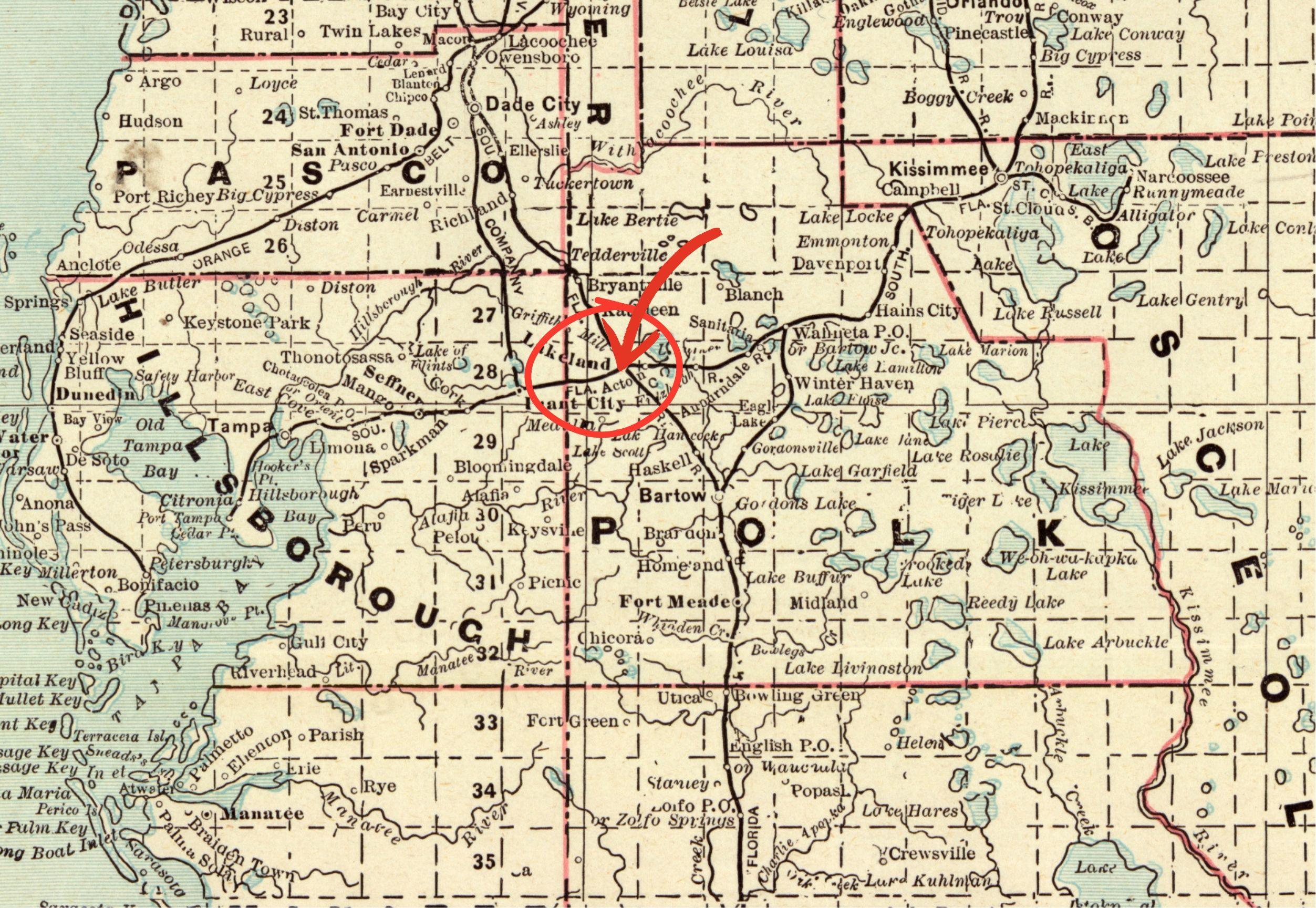
Old Polk County Map, 1887 | Image via Florida Memory
Here is a little story.
Lakeland almost had a rival.
Not a far-off rival, either. This one was right next door, on the shore of Lake Parker.
It had a train depot in its town square.
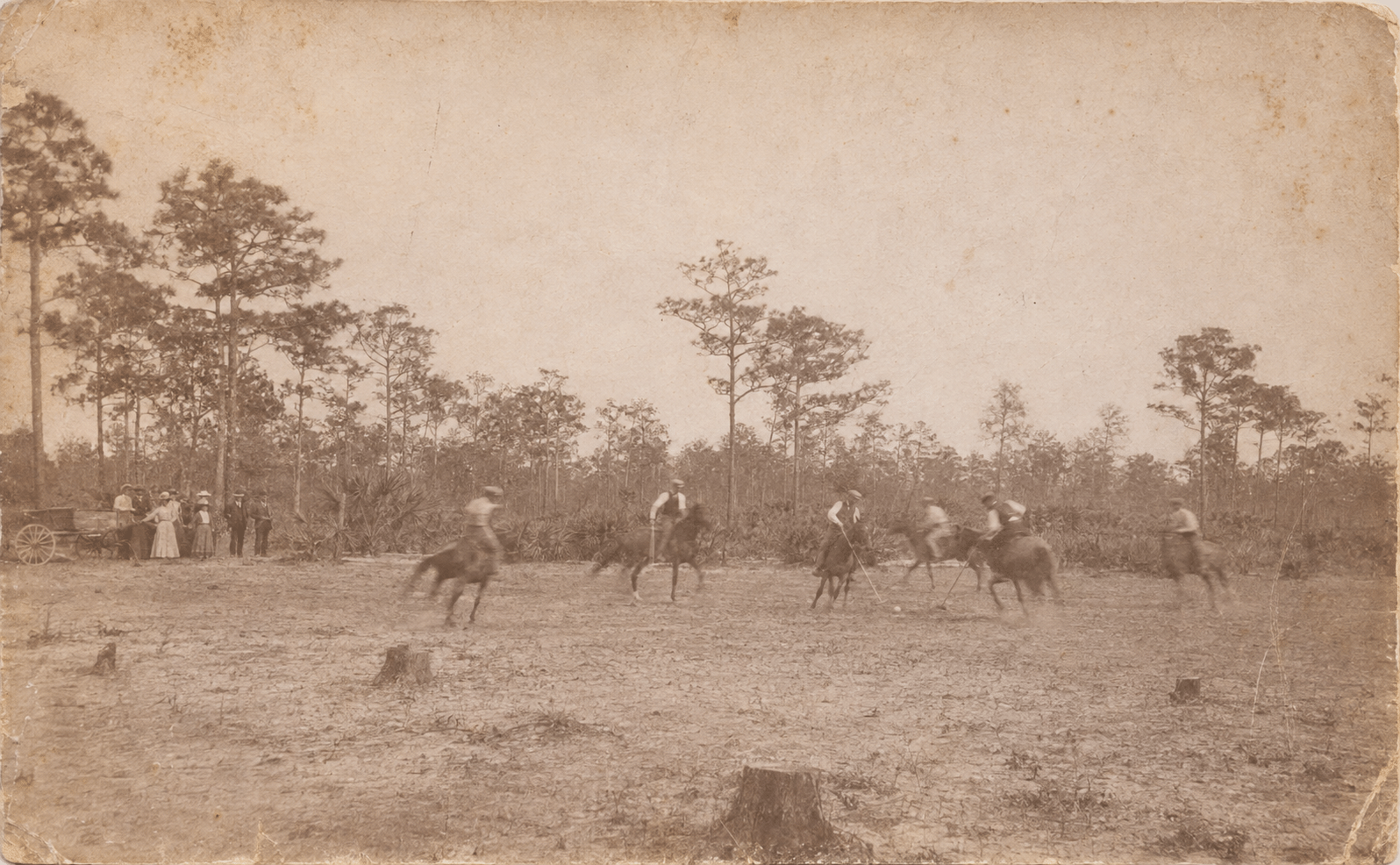
It had Englishmen playing polo and cricket.
It had a church before Lakeland did.
Then its depot burned down, under what the City of Lakeland's own history calls "mysterious circumstances."
Today, almost nobody has heard of it.
It was called Acton.
The English Headquarters
Acton starts with a land deal.
In the early 1880s, a Philadelphia businessman named Hamilton Disston bought 4 million acres of Florida.
He then sold off pieces to other investors, and that included a British group called the Florida Mortgage and Investment Company.
Its manager in Florida was Piers Warburton, a former lieutenant in the Royal Navy.
In 1884, a group of Englishmen established Acton between Lake Parker and Lake Bonny.
They named it after Lord Acton, the English historian. (Yes, the "absolute power corrupts absolutely" guy.)
And they weren't shy about the plan.
A Polk County booklet from 1885 put it this way: "This is to be an English headquarters."
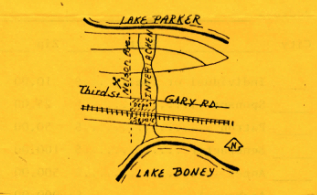
Sketch of Acton, FL | Image via Lakeland Public Library
Polo In Polk County
For a few years, it worked.
About 200 people lived there.
The state's historical marker says its "atmosphere, dress and custom were typically English."
Polo, fox hunting and cricket were part of daily life.
In Polk County. In the 1880s.
An 1885 Florida magazine listed two hotels (the Acton House and the Lake House), two large stores, a saloon, a schoolhouse and a sawmill.
And then there was the thing that mattered most.
The South Florida Railroad ran straight through the middle of town, with "the depot being in the middle of the public square."
If you wanted to build a Florida town in the 1880s, that was the whole game.
AI-generated concept image. Not a historical photograph.
The Man Next Door
The problem was Abraham Munn.
Munn was a businessman from Louisville, Kentucky, and in 1882 he bought 80 acres of what's now downtown Lakeland.
He platted his town in 1884, the same year as Acton.
He passed on the names Munnville, Red Bug and Rome City.
He went with Lakeland, and it was incorporated on January 1, 1885.
According to the State Archives of Florida, Munn also built Lakeland's first railroad station in 1884, at a cost of $2,500.
So now you have two brand-new towns, on the same railroad line, a mile or two apart.
Same lakes. Same trains. Same dream.
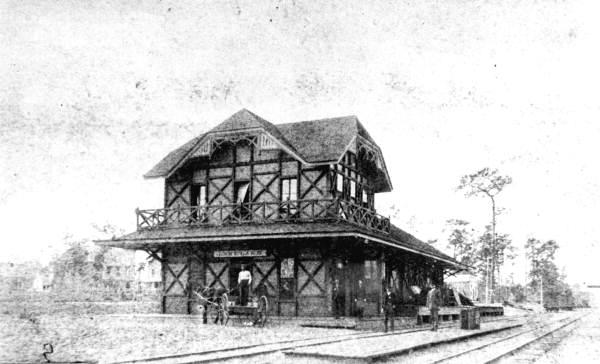
Lakeland's 1884 depot | Image from Florida Memory
The Fire
Then, in the late 1880s, Acton's depot burned to the ground.
Nobody seems to know why.
The City of Lakeland's history says only that it happened "under mysterious circumstances," and that a larger, modern depot was built in Lakeland shortly after.
So did somebody do it?
Full transparency: we have no idea.
We couldn't find a single record of how it started, and there's no evidence anyone set it. A wooden building next to wood-burning trains could easily have gone up on its own.
But you can see why people still ask.
LALtoday even tried to turn it into a game of Clue in 2021.
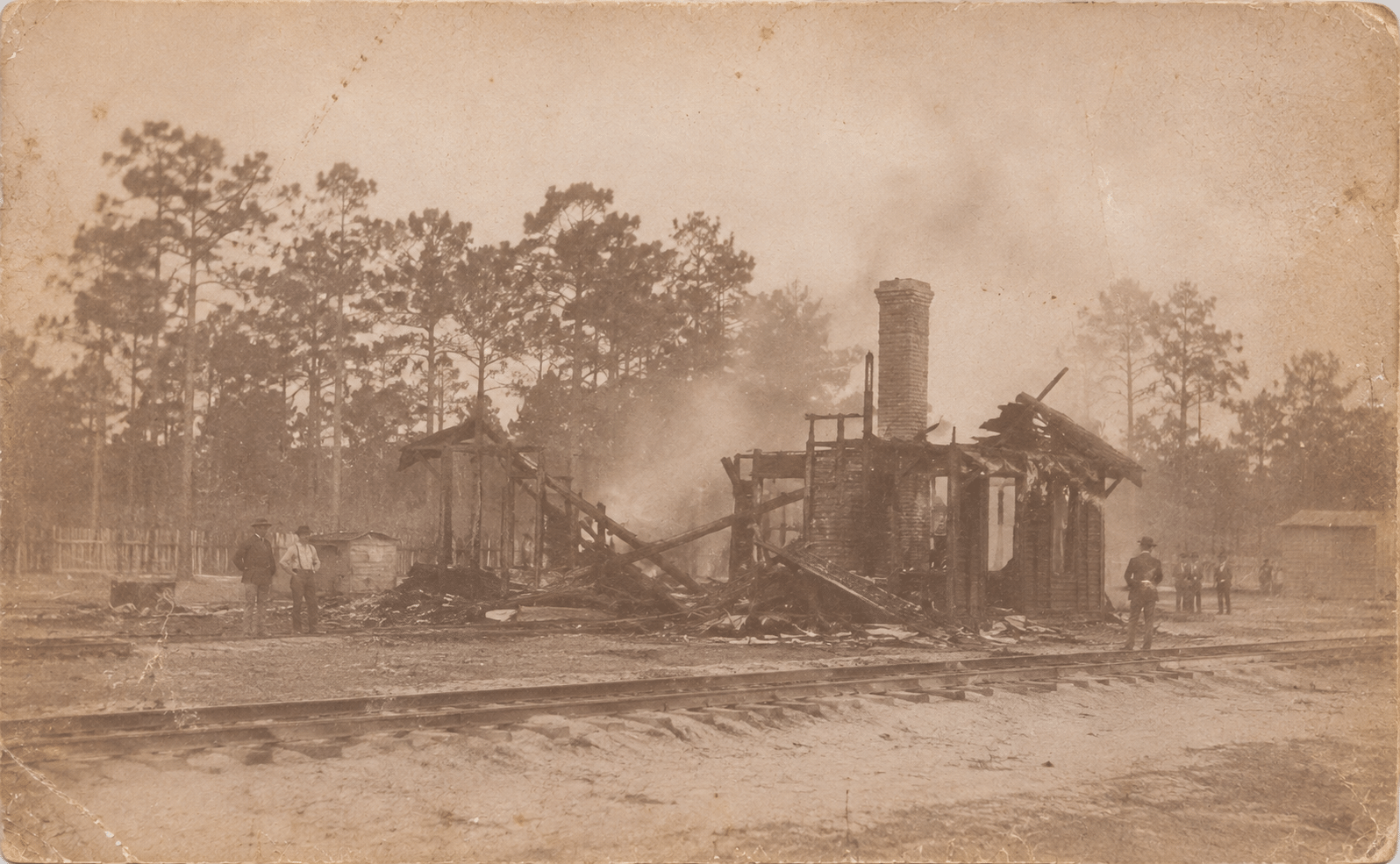
AI-generated concept image. Not a historical photograph
More Title Than Money
Whatever caused it, the momentum had moved two miles west.
Acton's post office closed in 1889, the same year people started moving to Lakeland.
And that summer, according to local historian Rick Cronin, a Florida newspaper ran an item about a man named Sir Francis Osbourne.
He was described as "a genuine English nobleman who has more title than money."
He was working in Acton's sawmill for one dollar a day.
That's a long way from polo.
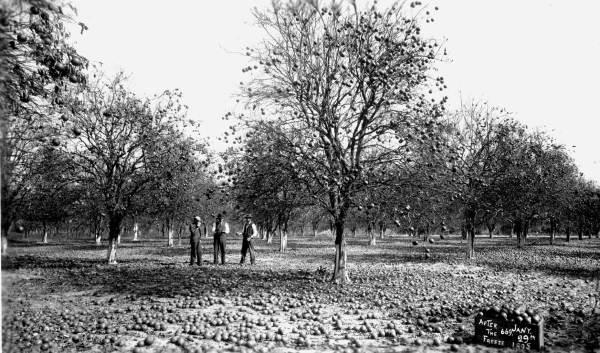
Citrus grove after freeze | Image from Florida Memory
The Freeze
Not everyone had given up.
Piers Warburton married Winifred Hodgeon in 1889, and the couple settled in Acton.
Winifred had come from England at 19 and started buying Florida land on her own.
Cronin writes that one of her parcels is now part of Disney's Magic Kingdom. (Imagine holding on to that one.)
They didn't.
The great freeze of 1894 and 1895 wiped out citrus across central Florida.
The Warburtons went home to England, and their land was later sold off for unpaid taxes.
Acton's state marker says the residents scattered after the freeze.
(The sources don't all agree on when Acton really ended. The marker says 1894, and the city says it was gone by 1906.)
Meanwhile, by the mid-1890s, about 25 trains a day were stopping in Lakeland.
What's Left?
Not much.
There's a state historical marker in Interlachen Park, at East Memorial Boulevard and Interlachen Parkway, looking out over Lake Parker.
But there's one other piece, and you may have driven past it.
Acton's little Episcopal church, All Saints', stood on what's now East Gary Road.
In 1892, its building was moved into Lakeland, to Lemon Street and Massachusetts Avenue.
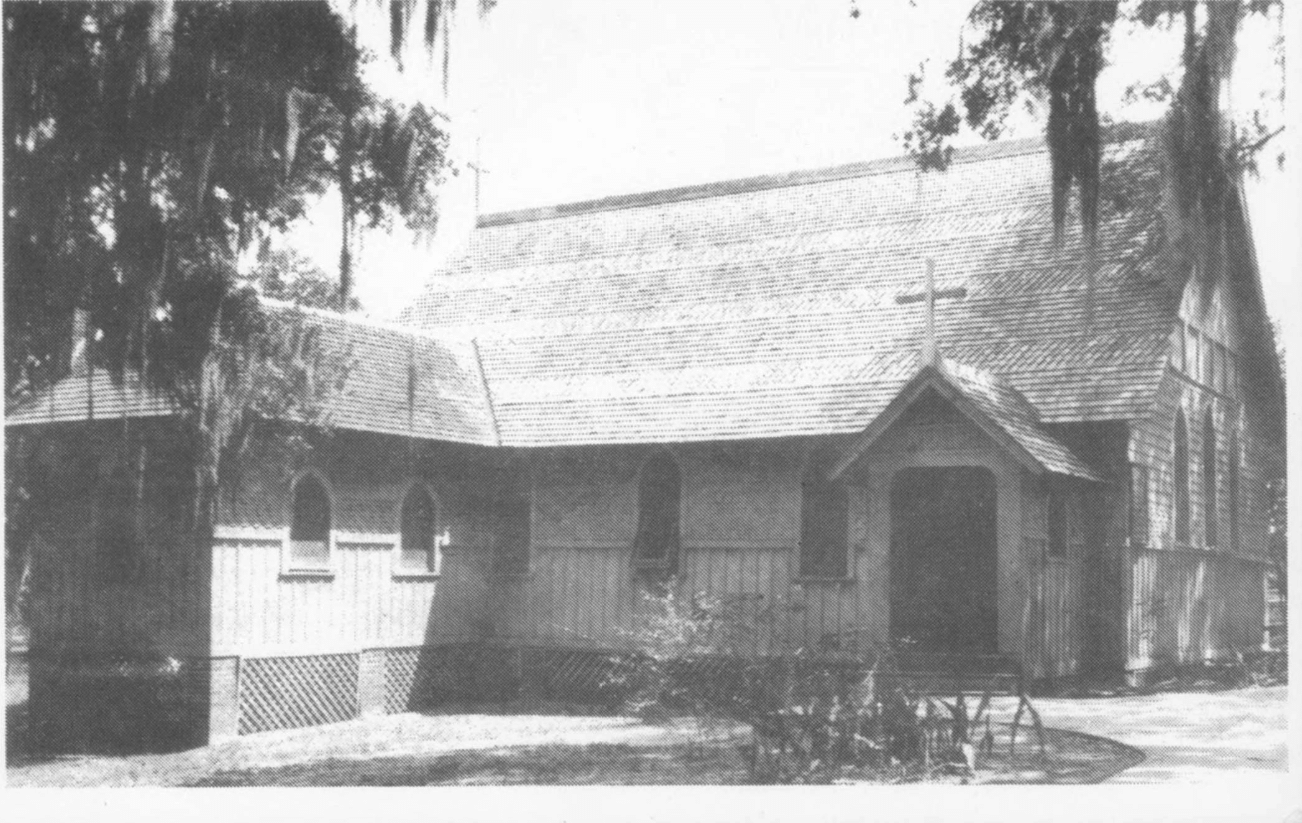
All Saints Episcopal Church, circa 1920 | Image via Lakeland Public Library
That old building is gone, replaced by the church that opened in 1924.
But the parish is still right there, downtown.
Acton lost the town. Lakeland got the church.
Oh, and one more thing.
Munn's depot, the one he built in 1884?
The State Archives says it burned down too, in August of 1901.

Sources: Florida state historical marker "Acton Community"; City of Lakeland, Brief History of Lakeland; State Archives of Florida, Florida Memory; Sherman Adams, Homeland (1885); LALtoday; Rick Cronin, Central Florida's Fascinating History; All Saints' Episcopal Church.
 Never Miss An Event Or Story