



Credit: State Archives of Florida, Florida Memory
About six miles east of Lake Wales, down a quiet road off Highway 60, there's a small lake with a stone grotto in the woods.
Most people in Polk County have never seen it.
But in the 1930s, a postcard claimed more than 75,000 people visited it in a single year.
Some of them came hoping the lake would heal them.
This is the story of the St. Anne Shrine.
Snowbirds From Canada
Around 1920, a group of French-Canadian Catholics started spending their winters near Lake Wales, getting away from the brutal cold back home.
They were led by a man named Napoleon Pelletier.
On a small lake east of town, they built a shrine to St. Anne, who is the patron saint of Quebec and, in Catholic tradition, the mother of the Virgin Mary.
They called it Ste. Anne des Lacs: St. Anne of the Lakes.
The Artist And His Son
In 1926, a French artist named Francies Marsollier came to the lake.
He brought his young son, who was sick with tuberculosis.
The boy got better. People credited the water.
(The sources don't all agree on the details here. Most say it was Marsollier's son. At least one says it was Pelletier's. Either way, the story stuck.)
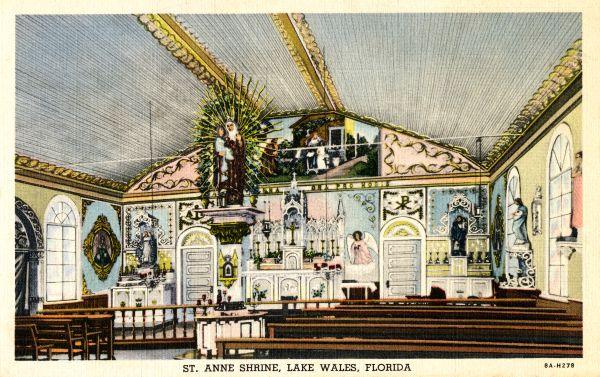
Marsollier promised to give his talent to the shrine, and he did. He painted murals across the chapel walls and carved sculptures for the grounds.
Credit: State Archives of Florida, Florida Memory
Pilgrims In Polk County
Word spread fast.
The first formal pilgrimage came in 1928, and soon there were two every year: one in February and one in July, near the feast of St. Anne on July 26.
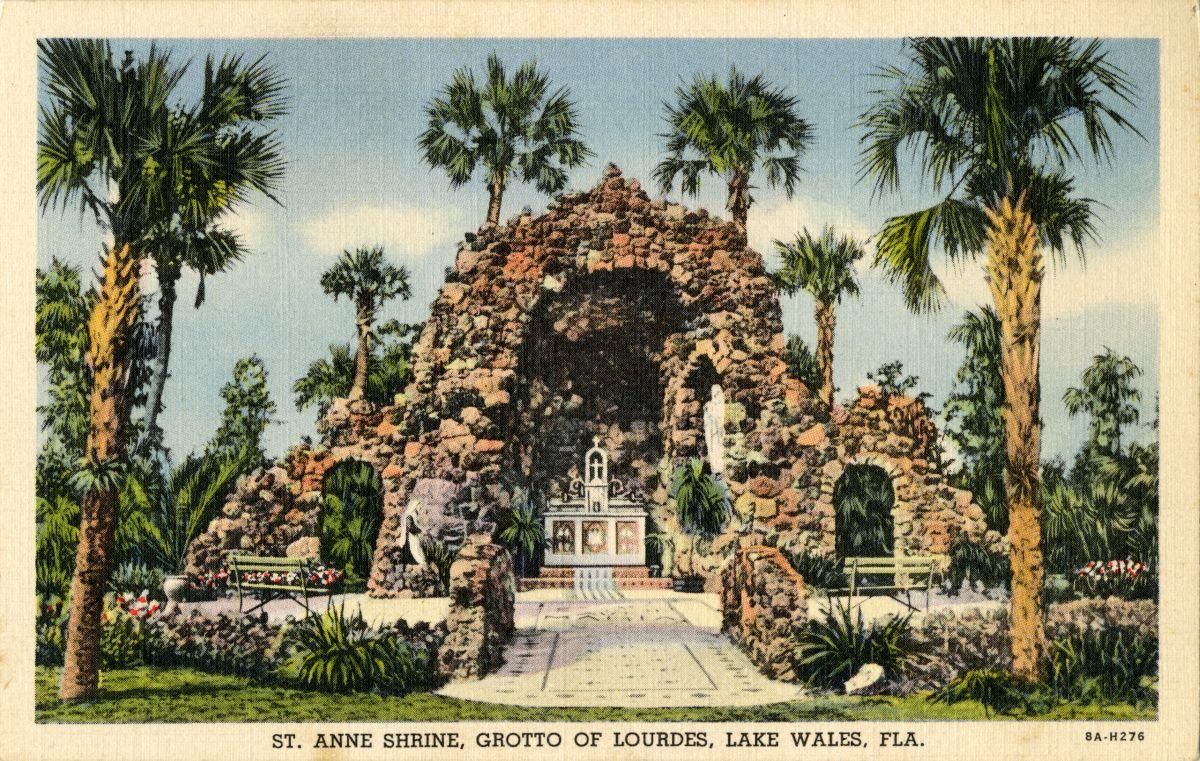
In 1933, the Bishop of St. Augustine came to dedicate a reproduction of the famous Grotto of Lourdes in France. It was built from Florida stone and stood about 40 feet tall, with a little arched bridge leading to it.
The shrine held two relics of St. Anne, which made it the only place in Florida with any. It also had a relic of the True Cross and a thorn said to come from Christ's crown.
A 1938 postcard put it plainly: "More than seventy-five thousand were there last year."
The Crowds Fade
The shrine didn't stay that busy.
In 1940, Father A.J. Salois, the priest at nearby Holy Spirit Catholic Church who had helped lead the shrine, was transferred to another town. Then World War II came, the French Canadians stopped making the winter trip south, and the chapel was closed up.
Pelletier died in 1942 and was buried on the grounds. (One account says his body was later returned to Canada.)
By the early 1960s, the church de-sanctified the shrine. The chapel was torn down, and most of the statues were taken away to protect them from vandals. Some of them reportedly ended up at Holy Spirit Catholic Church in Lake Wales.
In the early 1980s, there was an attempt to sell the land. The neighbors stopped it.
Credit: State Archives of Florida, Florida Memory
What's Left
More than you'd think.
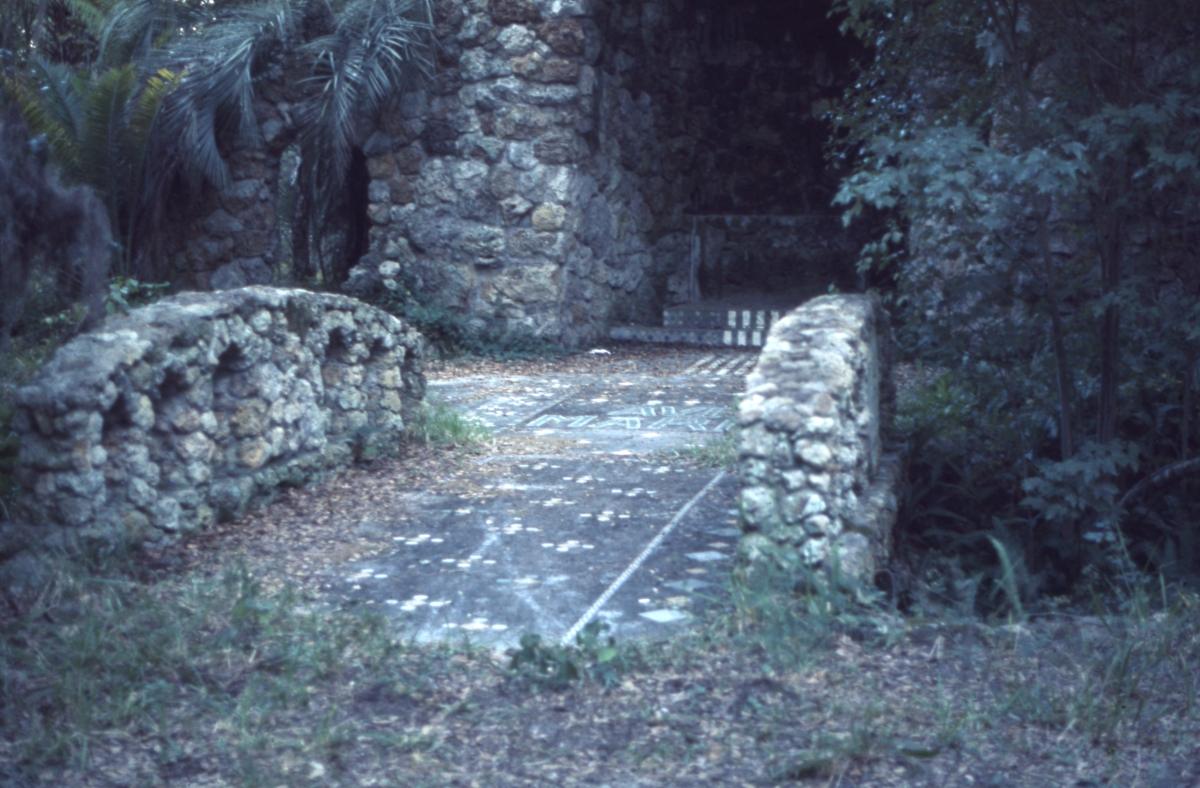
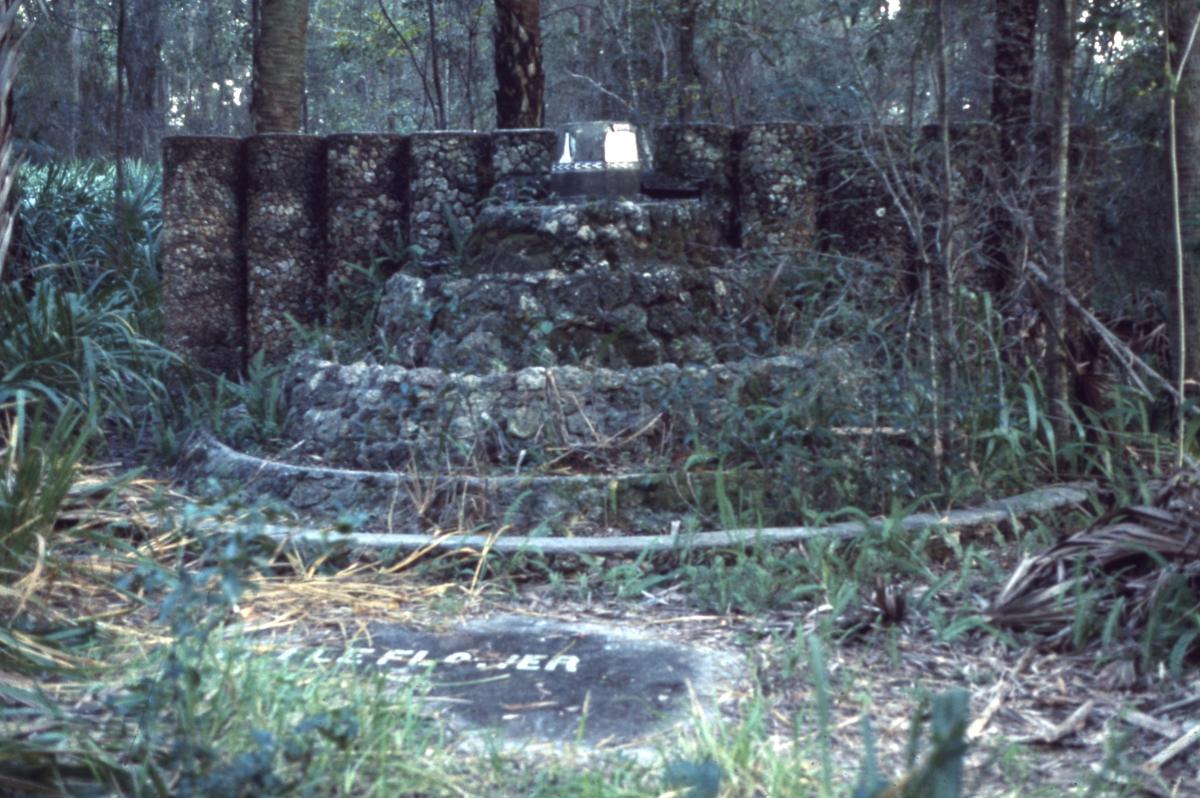
The grotto is still standing. So are the stone bridge and the steps of the old chapel.
About 30 homes sit across the road from the lake, and the neighbors help look after it.
And in recent years, a sunrise Mass has still been held at the grotto on Easter Sunday, more than a hundred years after a group of snowbirds from Canada built a shrine in the Florida woods.
The land still belongs to the Catholic church, so if you go, be respectful. It's a place people still come to pray.
Credit: State Archives of Florida, Florida Memory

Sources: National Catholic Register (2017); Wikipedia, "Ste Anne des Lacs"; Nevada Expeditions; Abandoned Florida (2024); Frontier Florida (2019); State Archives of Florida, Florida Memory (1938 postcards and 1974 slides).
 Never Miss An Event Or Story